Wednesday, 8 June 2011

Garth Nix - Writing Philosophies

The Previous post was a revised regurgitation of Garth Nix's nine stages of Novel writing, a brilliant guide or reference for both writers and aspiring writers alike. After submitting the previous post I went back to www.garthnix.co.uk and found the "one liners" he likes to use to sum up his own writing philosophies. Needless to say they rang so true that once again, i'm going to share them with you here...


'You can't write if you don't read.'

'Just write one chapter at a time and one day you'll be surprised by your own finished novel.'

'Writing anything is better than not writing something perfect.'
'Read, write, revise, submit, repeat.'

'Never believe the first twenty publishers who reject your work. For the twenty-first, submit something new.'

'A goatee and a garret are all very well, but you have to actually write to be a writer.' 


Source:  How I Write: The Process of Creating a Book : www.garthnix.co.uk 

Garth Nix - Nine Stages of Novel Creation

Whilst flicking through the website of one of my favourite authors, Garth Nix, I found a somewhat fantastic post on the nine stages he uses to create a Novel. I felt I should share with you the most interesting, helpful pointers, so i've broken them down a bit into shorter points. Enjoy!

The Creative Lifecycle of a ‘Garth Nix’ Book.
Disclaimer: All rights and copyright belong to Garth Nix. 


The nine stages in the lifecyle of my novel creation are:

Daydreams and Musing
A Small Vision
Building the Bones
That First Chapter
The Long, Hard Slog
Sprinting Home
Rest and Revision
Revulsion and Dejection
Parting Company

1. Daydreams and Musing

* The first, ‘Daydreams and Musing’ is about ideas. Ideas are the easy, fun part.

* Gather ideas from everything that goes on, from observing and experience, e.g. from your life,other people’s lives, reading, television, the Internet, incidents on the streets or details of history; from myth and legend; from landscape; from the living natural world; from all the fiction you've ever read.

* ‘Ideas’ I don’t mean fully-fledged plots, situations or characters - these are expressions. Ideas are the fleeting bits of information that lodge in my head, e.g. :

  • The look of the sky in summer when a light rain is falling at sunset.
  • Two old men bickering light-heartedly on the street about something that occurred forty years ago.

* Daydreaming is taking thoughts and seeing where they might go and how they might connect with other thoughts.

* At this stage, it’s nothing but daydreams and musing. Nothing concrete, in story terms. But at some point there will be a bunch of ideas that will join together and rise up to the surface, ready to move into the next stage of the novel-writing lifecycle.


2. A Small Vision

* My novels usually begin for me with some kind of image that captures the beginnings of character, setting and story. Like having a still from a film – where I know nothing about any other part of the film. All I have is this image, and a sense of the mood that it evokes.

* Usually, I will play around with this ‘small vision’ and look at the thoughts and ideas that it throws off. Sometimes, the original scene I’ve imagined will never be in the book at all, it will just be a foundation that remains out of sight.

* I usually have very limited knowledge of my characters when they first come into a book. I think about the sort of person who would be good to have in this story, I get a vague idea of what they are like and perhaps of their physical characteristics. 
   - All I need at this stage are a few ‘starter’ details, enough for me to get on with the storytelling.

* As these ideas are coalescing into something resembling the outline of the story, I will write them in a notebook and it’s very likely they will remain without anything further being done to them.
 - Even if I do follow up a particular story  it might be some considerable time later. I usually spend a year or so after this original ‘first image’ comes together, thinking about it from time to time, exploring possibilities that stem from the basic idea and letting the whole lot ferment.

* At some point I will sit down to develop this first image and the ideas connected to it into an actual story outline, moving along to the next stage in the lifecycle.


3. The Building Bones
                            
* A week, a month or even years after that initial ‘small vision’ I will usually sit down and try and work out the bare bones of the story and how I am going to tell it. 

* I look back at the notes I’ve taken and I dredge up all the points I’ve been thinking about it. Then I sit down and write a chapter outline. - I write a paragraph for each chapter, describing what happens.

* I sometimes wonder why I bother to do this, chapter outlines rarely bear any close resemblance to the finished book. I’ve usually departed from the outline within a few chapters and by the time I’m halfway through a novel there is often almost no correlation between the outline and the actual story.

*  However, it makes me think about the overall structure of the novel, which kickstarts some subconscious process that will continue through the writing, monitoring the narrative structure. Secondly it serves as a psychological prop.
If I have a chapter outline, I presume I know where I’m going, even when I don’t really. In this sense the chapter outline is like a very out-of-date map. Most of it is wrong, but there will be some landmarks on it. So if I get terribly lost in my book, I can always go back to the outline and though most of it will be wrong, I might see some important plot point or notes for a character that will help me get back on the narrative road.

* Using the ideas I’ve mentioned (See full article on www.garthnix.co.uk) and the small vision, my chapter outline might begin something like this:

Prologue

A magical vortex kidnaps two Venetian merchants, Antonio and Salerino from their ship on a rainy evening. The event is observed only by Adrian and his pet monkey, Morocco, who are both touched by the vortex. It imbues Adrian with a gift and a curse, and Morocco likewise. Gift is being able to talk to the wind. Curse is recurrent dizziness and fear of heights. Adrian thinks his master has been killed. There is a bloody stain upon the deck.

Chapter One

Adrian is arrested for the murder of his master. He and Morocco are put in prison, summarily tried and sentenced to death. Adrian thinks he is going mad when the winds talk to him. The Sou-Easter tells him is master is alive, held captive in Alexandria. Adrian and Morocco discover they can communicate after a fashion via the winds. They plan to escape. 


4. The First Chapter

* It’s not unusual for me to write a prologue at the same time as I’m working on the chapter outline, and in some cases I’ve written the prologue immediately after my initial ‘small vision’

* After I’ve written the prologue I often stop for a while. My usual practice seems to be to write the chapter outline and the prologue (in whatever order happens) and then to rest the whole thing for a few weeks or a few months before really starting in again.

* In this ‘resting time’ I’m still writing. I work on short stories, or on the ideas that may or may not come together. And of course part of my mind at least is still putting together more ideas and working out the story for this current book.


5. The Long, Hard Slog


* I never tell myself I am writing a 100,000 word book. When I sit down to write, I focus on the fact that I am writing a 2,000-4,000 word chapter. It’s possible to write a whole chapter in a single sitting, on a good day, or it might take several days. But then it’s done and I write it in the book, and I add up the total and as that list grows, chapter by chapter, I know I’m getting to my ultimate goal.

* The key is to force myself to the keyboard or to pick up a pen. I can find any number of excuses or diversionary activities to avoid writing, but you can’t let too many days go past without getting some words done. Writing is a habit as much as anything else and it’s a habit that can easily be lost.

*  I will complain I don’t know how to write books any more, that what I’ve already written is incredibly clunky and terrible and that I don’t know how to go on. It needs reminding that I always react in the same way at the same time and that I also always go on to finish this clunky, terrible tome. I then remind myself that even if it is terrible, I am no judge at this time, and it’s better to have something written that can be fixed later than a blank page....So I go back to work, muttering and complaining about my lack of ability, and I get on with it.

* It usually takes me about 90% of the total time spent writing a book to write the first two-thirds. At some point, usually in that last third, everything suddenly accelerates. The story comes together, the pent-up power of the narrative suddenly flows and the book enters its next stage.


6. Sprinting Home


* By this stage, I am usually writing at night as well as during the day. Since becoming a full-time writer, I try to keep regular office hours. (This is a luxury I’m well aware of and I often remember the days when I could only write on the occasional evening and on Sunday afternoons. But as I’ve mentioned before, I still managed to write a book every few years.)

* I think there is some relationship between the energy put into a book and the energy of the narrative, and when everything is building to the climax and resolution of the story I think that for me at least, it helps to keep at it, to write fast and really charge for the finish line.

* Naturally, this usually results in exhaustion and the need for rest. Which is not a bad thing, because books need that too, before you can bring a fresh eye back to the manuscript. After the mad rush, the book enters the next stage of the lifecycle. 


7. Rest and Revision

* Once finished I like to let the manuscript lie fallow for a while, preferably at least a few weeks. In that time I catch up on administrative things, perhaps jot down a few ideas and generally take life a little more slowly. I don’t look at the manuscript at all and I try not to think about it.

* Then, when the time seems right I sit down and go through the whole manuscript again, to revise it and improve it and try and make it as good as I can.

* By this stage, each chapter in the manuscript has probably been individually revised three or four times and different parts of the book may have been revised many more times. But there is nothing like coming back to the entire manuscript after a bit of a rest.

* Usually the revisions at this point are to the prose, to correct minor plot points or inconsistencies, and to add detail.

* Even if there isn’t a deadline, there comes a time when you need to stop revising and just send it off, either to see if someone will buy it (as in make an offer to publish) or to deliver it to your editor. Then comes the waiting, to see what the editor thinks and to get their editorial report or first edit. It is during this period that the author, more than the book, enters the next stage.


8. Revulsion and Dejection 

* I mentioned that halfway through I usually doubt my work, but I get over it and keep going. Often, when the book is done and has gone off to the editor, this doubt returns and I think that not only have I lost the ability to write, I’ve demonstrated this lack in the latest manuscript.

I overcome this in three ways.

~ First of all, I tell myself that if the book does turn out to be terrible, it simply means a lot more work ahead to try and make it better, with the help of an editor.
~ Secondly, I tell myself that if even after that the book is no good I will just have to work harder to write a better one next time.
~ Thirdly, if that doesn't work and I really have lost all my writing abilities, then at least I can go back to work.

* This  stage doesn’t usually last too long. After I’ve moaned a bit, I start thinking about a new book and get interested in that and forget to be angst-ridden and melancholy.

* Around this time, the manuscript also comes back, with an editorial letter and either some or lots of notes in the margins or on the electronic file. This edit is what is often called a structural edit and usually it flags places where more is needed, or less is needed, or something simply doesn’t work.

* As I go to work on the structural edit, which is essentially a guided revision process, the book and I are already entering the final stage of the creative process.


9. Parting Company


* Responding to the structural edit and then later checking the copy-edit (which is where the prose is smoothed and minor inconsistencies are corrected) always feels like a strange afterthought to me. Emotionally I have already moved on to the next book, and the editing is purely a craft process, done with the head not the heart.

* I think you need to let a book go when all the work is done, it’s important to move on. I've often met authors whose whole self was entirely bound up in a single book, usually their first. Their lives would rise or fall depending solely on that book’s fate, and in this business, that’s an incredibly foolhardy and dangerous gamble to make.

* You need to say ‘goodbye and good luck, my friend’ and start on the next book. Sure, you’ll be meeting again when the book comes out, and it’s important to try and help it along then as much as possible, though again it’s easy to lose balance in promoting a book.
I’m always really pleased to see one of my finished books. I get a great feeling of accomplishment when I hold that firsy copy in my hand, a feeling that is undiminished from the very first time, way back in 1990.

* However I also feel detached, and I think that is a good thing. I probably already have a new book partly written, or at least the outline is there and the prologue. I look at this finished book and I flick through the pages, and even though I can remember every part of writing it, sometimes I read a bit and I feel like I’m reading someone else’s story. A real book, not one of my own. I like that feeling, because it means I’ve succeeded in my ultimate ambition: writing the sort of book that I like to read.

* Those are the nine stages in the creation of one of my novels. I’m not really sure whether I understand the whole process any better myself, but I hope I have provided something of an insight into my methods, techniques and eccentricities.

Source: www.garthnix.co.uk

Photo Credits:
3. http://www.publicpropertyuk.com/wp-content/uploads/2010/06/building-blocks.jpg

Sunday, 15 May 2011

"Quick Characters" and short story exercises.


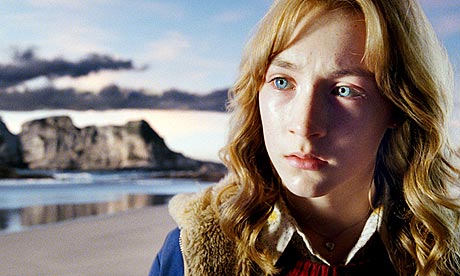
Over and over again I hear about problems people have picturing and describing characters and sometimes people who just can't think up characters at all! Personally i call myself a "visual writer" whereby I like my characters to have something familial or solid about them and so to help me with visualisation i often take pictures of people (i mean celebs, obviously not just randomers I meet on the street) and create a basic profile that I can reference back to. Often i'll make it into a temporary book cover or I will have a selection of pictures at least two if not three of which will be contrasting in one way or another to allow be to refer back to, especially when describing emotion or drawing on the characters look or attitudes.

Pour Example:


Photo: Saorise Ronan.


By using a range of different pictures portraying different expressions and from alternate angles i can use this to better description and clarity of my character, regardless of the figure/person you chose to represent your character, it's the range of emotion and the range of features you want to be able to focus in on!


However, I do hear quandries about those who either "can't think up characters" or "can't be bothered to think up characters" or simply don't know what to do with the character/s they have. I found a pretty nifty exercise whereby you take two pictures, e.g. picture a) a thundery sea front, and picture b) your character or someone that you can use to represent that character and you write a short excerpt or short story on how they got there. This allows you to explore and examine circumstances, play around with your character and gives your plot somewhere to go when all else fails.
However, I personally got a little tedious of this exercise until I came upon a slightly different idea, involving a video, a singer, taking into account the lyrics the settings and the actual artist I found that my character was literally living in front of me, singing something I could weave a story from and gave me all the basic foundations i'd need for a short story that could easily overflow into a novel given time and imagination.


The example i'm going to show you and the task I set is easy! Watch the video! The girl is one of your characters, she could be a main character, she could be the main character or just have a fairly substantial part to play. Think about:

* Who she is
* What's her name
* What is she feeling
* How did she get there
* What happened
* Why is she there
* Where is she
* What room is she in
* Why does she dressed that way
* Who else could be there with her
* Who is she singing to
* Can anyone else hear her singing
* Are the lyrics meaningful to the plot or just something that express what's inside her?

 There are so many possibilities that spring to mind watching the video you'd have to have less imagination than a Victorian nanny not to be able to write something from this and, for me, one of the best parts about basing a character, or part of a character, on an actual person is that it enables you to draw from very real emotions right in front of you and gives you the potential to really absorb all the physical detail that wouldn't be possible or nearly as easy if your characters are purely all mental.

http://www.youtube.com/watch?v=aNzCDt2eidg


I've popped down the lyrics because as exampled in previous posts, lyrics really can help lace together ideas and weave them into a rich tapestry of flowing words which will spin themselves into a novel!

Come on skinny love just last the year
Pour a little salt we were never here
My, my, my, my, my, my, my, my
Staring at the sink of blood and crushed veneer

I tell my love to wreck it all
Cut out all the ropes and let me fall
My, my, my, my, my, my, my, my
Right in the moment this order's tall

I told you to be patient
I told you to be fine
I told you to be balanced
I told you to be kind
In the morning I'll be with you
But it will be a different "kind"
I'll be holding all the tickets 
And you'll be owning all the fines

Come on skinny love what happened here
Suckle on the hope in lite brassiere
My, my, my, my, my, my, my, my
Sullen load is full; so slow on the split

I told you to be patient
I told you to be fine
I told you to be balanced
I told you to be kind
Now all your love is wasted?
Then who the hell was I?
Now I'm breaking at the britches
And at the end of all your lines

Who will love you?
Who will fight?
Who will fall far behind?


Song/Video: Birdy - Skinny Love (Originally Bon Iver)
Lyrics credit to: http://www.lyricsmania.com

Tuesday, 12 April 2011

Finding Inspiration - in Music and Lyrics (2)

My last inspiration in music and lyrics post revolved around the "body" of the music, the lyrics that gave it meaning, this post will focus much more on the "soul" of the music, the chords and melodies that create the feeling. This is perfect for mood writing and creating scenarios, very often I find myself writing one thing but as the tone of the music alters it can completely change what i'm writing, something very tense or fast might suddenly have a moment of tenderness intertwined, or it may become dangerous or just cease altogether. I've been writing to music for what feels like an eternity, I love classical music, that doesn't just mean Mozart, Yiruma and Einaudi, that can mean anything from a sound tracks to sound effects. Sound tracks are possibly some of the  best pieces to write to, they were designed to inhibit a particular emotion or response, if you allow yourself to write to the mood of a piece of music rather than trying to make the music fit what it is you're writing then it's pretty much a guarantee to some fantastic stuff.

* Remember sound track music was designed to create a specific feeling, so use it to help you develop the tone of the piece you are writing, whether you close your eyes and allow the scene to act out in your head or write it along side the music then and there, this is probably one of the best ways to ensure your writing has the right effect!


Here are some of my favourite sound tracks to listen to when i'm writing and a couple of favourites from the overall albums:

Gladiator.
- The Might of Rome
- Barbarian Hoarder
- Honour Him   
- Am I Not Merciful
- Now We Are Free

The Dark Knight.
- Like A Dog Chasing Cars
 - And I Thought My Jokes Were Bad
- Agent of Chaos
- A Dark Knight

The Tudors. 
(from seasons 1-2)
- The War Room
- Mixed Messages From Anne
- Katherine Stripped Of Her Jewels
- Anne's Premonition
- Dreaming of Killing Anne Boleyn
- Anne Miscarries Her Baby
- Aren't You The King Of England?
- Anne Dreams of her Childhood.
- Confessions And Arrests

The Village
- The Bad Colour
- I Cannot See His Colour
- Rituals
- The Forbidden Line
- The Shed Not To Be Used

Harry Potter and the Deathly Hallows. P1
- Sky Battle 
- Death Eaters
- Dobby
- The Locket
- Destroying the Locket
- Hermione's Parents
- Captured and Tortured
- Rescuing Hermione
- Farewell to Dobby
- The Elder Wand

Eclipse the motion picture Sound Track
- Imprinting
- Rosalie
- Jacob Black
- Mountain Peak
- The Kiss
- Jane
- As Easy As Breathing

New Moon the motion picture Sound Track
- New Moon
- Romeo & Juliet
- Volturi Waltz
- Edward Leaves
- Memories of Edward
- Almost A Kiss
- Dreamcatcher
- The Volturi
- The Cullens

Lord of the Rings - Return of the King
- A Storm is Coming
- Minas Tirith
- Shelob's Lair
- The Steward Of Gondor 
(with Pippins song)
- Twilight And Shadow
- The Black Gate Opens
- The End Of All Things

Pride and Prejudice
- The Living Sculptures Of Pemberly
- Arrival At Netherfield
- Georgiana
- The Secret Life Of Daydreams
- Lizzie On Top Of The World
- Darcy's Letter 
- Your Hands Are Cold
- End Credits

Tarzan
 - One Family
- I Gorilla

Defiance
- Survivors
- Tuvia Kisses Lika

Atonement 
- Robbies Notes
- Two Figures By A Fountain

I Am Legend
- I'm Sorry
- I Am Legend (Epilogue)

The Ghost Writer
- Hidden Documents 
- In The Woods
- Chase On The Ferry

The Happening
- My Firearm Is My Friend

The Sixth Sense
 - Mind Reading
- Photographs
- Malcom Is Dead

Abandon
- Opening Titles
- The Country House

The Beautiful Country
- Strange Look 


There are so many hundreds of fantastic soundtracks you can use to help you create the right atmosphere for your characters or story, some of the names I find that keep cropping up are:

* James Newton-Howard
* Alexandre Desplat
* Brian Crain
* Hans Zimmer
* Trevor Morris &
* Howard Shore

So be sure to listen to some of their creations and allow it to influence yours.
After all, does the writer tell the story or the story tell the writer?
You chose!

Finding Inspiration - in Music and Lyrics

So I'm posting this a lot sooner than I thought I was because something happened last night whereby I was chilling out listening to my ipod and two songs came on one after the other and an entire story seemed to spring out of absolutely no where, to the extent that I managed a word count of 10,573 in one sitting that day. I realised that the story in my head was actually woven around the lyrics to the songs, a case of my own interpretation of the lyrics and the way my mind merged the two of them together. Of course it's not a complete story, but it formed enough of a skeleton in my head to enable me to launch myself into something new and develop it into another novel. 
So with out further adieu i'll share the examples I found and you'll see how easy it is just to combine two things into one. I've underlines the parts that, to me, really created something. Both songs are quite similar which I think helped, but not all the lines are necessarily all to do with plot, some of them are to do with characterisation, like the tone, feelings and motivation behind the words:


Taylor Swift - Change.


And it’s a sad picture, the final blow hits you
Somebody else gets what you wanted again and
You know it’s all the same, another time and place
Repeating history and you’re getting sick of it
But I believe in whatever you do
And I’ll do anything to see it through

Because these things will change
Can you feel it now?
These walls that they put up to hold us back will fall down
This revolution, the time will come
For us to finally win
And we’ll sing hallelujah, we’ll sing hallelujah

So we’ve been outnumbered
Raided and now cornered
It’s hard to fight when the fight ain’t fair
We’re getting stronger now
Find things they never found
They might be bigger
But we’re faster and never scared
You can walk away, say we don’t need this
But there’s something in your eyes
Says we can beat this

Because these things will change
Can you feel it now?
These walls that they put up to hold us back will fall down

This revolution, the time will come
For us to finally win

And we’ll sing hallelujah, well sing hallelujah

Tonight we stand, get off our knees

Fight for what we’ve worked for all these years
And the battle was long, it’s the fight of our lives
But we’ll stand up champions tonight


It was the night things changed
Can you see it now?
These walls that they put up to hold us back fell down
It’s a revolution, throw your hands up
Cause we never gave in
And we sang hallelujah, we sang hallelujah
Hallelujah


Source: http://www.azlyrics.com/lyrics/taylorswift/change.html


Taylor Swift - Long Live.


I still remember this moment
In the back of my mind
The time we stood with our shaking hands

The crowds in stands went wild
We were the kings and the queens
And they read off our names
The night you danced like you knew our lives
Would never be the same
You held your head like a hero
On a history book page
It was the end of a decade
But the start of an age


Long live the walls we crashed through

All the kingdom lights shined just for me and you

I was screaming, "long live all the magic we made"
And bring on all the pretenders
One day we will be remembered

I said remember this feeling
I passed the pictures around
Of all the years that we stood there on the sidelines
Wishing for right now
We are the kings and the queens
You traded your baseball cap for a crown
When they gave us our trophies
And we held them up for our town
And the cynics were outraged
Screaming, "this is absurd"
'Cause for a moment a band of thieves in ripped up jeans got to rule the world

Long live the walls we crashed through
All the kingdom lights shined just for me and you
I was screaming, "long live all the magic we made"
And bring on all the pretenders
I'm not afraid

Long live all the mountains we moved

I had the time of my life
Fighting dragons with you
I was screaming, "long live the look on your face"

And bring on all the pretenders

One day we will be remembered

Hold on to spinning around

Confetti falls to the ground

May these memories break our fall


Can you take a moment

Promise me this:

That you'll stand by me forever

But if God forbid fate should step in
And force us into a goodbye
If you have children someday
When they point to the pictures
Please tell them my name
Tell them how the crowds went wild
Tell them how I hope they shine


Long live the walls we crashed through

I had the time of my life with you


Long, long live the walls we crashed through

All the candlelight shined just for me and you

And I was screaming, "long live all the magic we made"

And bring on all the pretenders
I'm not afraid


Singing long live all the mountains we moved

I had the time of my life

Fighting dragons with you


And long, long live the look on your face

And bring on all the pretenders

One day we will be remembered


Thank you Taylor Swift! <3

Adding on, i've recently come across another song where a couple of the lyrics really stood out to me.

Anna Bergendahl - The Army.

It was the calm before the storm and she was taking up the torch
She saw them riding for a fall, blind to the spirit of the lord
They sold their bodies and their souls but she held on to keep her own
Cause there were something in the air
That told her just fall in the stairs

Don't lose your faith, the light will shine on your way
And listen - don't change your heart
The day will breaking you, stand tall

And so she builds an army with all her friends
All prepared to fight til the bitter end
And they started marching irrespectable
It's the only dying in the name of love, love

And they were heading for the hills
She filled her caution to the wind and travelled off the beaten track
The one with shuttles of the past

Don't lose your faith, the light will shine on your way
And listen - don't change your heart
The day will breaking you, stand tall

And so she builds an army with all her friends
All prepared to fight til the bitter end
And they started marching irrespectable
It's the only dying in the name of love, love

It was the calm before the storm and she was taking up the torch
She saw them riding for a fall, blind to the spirit of the lord


                      Thank you Anna Bergendahl!